If you run a conference, forum or trade show, your event website is the first place attendees, speakers and sponsors look. Too often, information ends up scattered across the site, social accounts and files sent over WhatsApp. This guide covers the key content of a website for events and conferences that makes it successful, organised by the phases of your event.
Why event websites fall out of sync
The common failure is a site that no longer matches reality: the program changed but the page did not, a speaker was added but never shown, or the registration link outlived the event. The fix starts with a site built on the assumption that content keeps changing, and that your own team can update it from a clear control panel instead of turning every edit into a technical task.
Key content before the event
Before the event, the goal is to convince visitors to register and attend. The essentials:
Event definition
Name, date, venue, organiser, and a short statement of purpose and target audience. This is the first thing visitors look for.
Schedule
A clear timetable of sessions, times and halls, easy to read on a phone so fewer questions reach your team.
Speaker profiles
A photo, short bio and affiliation for each speaker, linked to their sessions. Few elements add more credibility.
Sponsors and partners
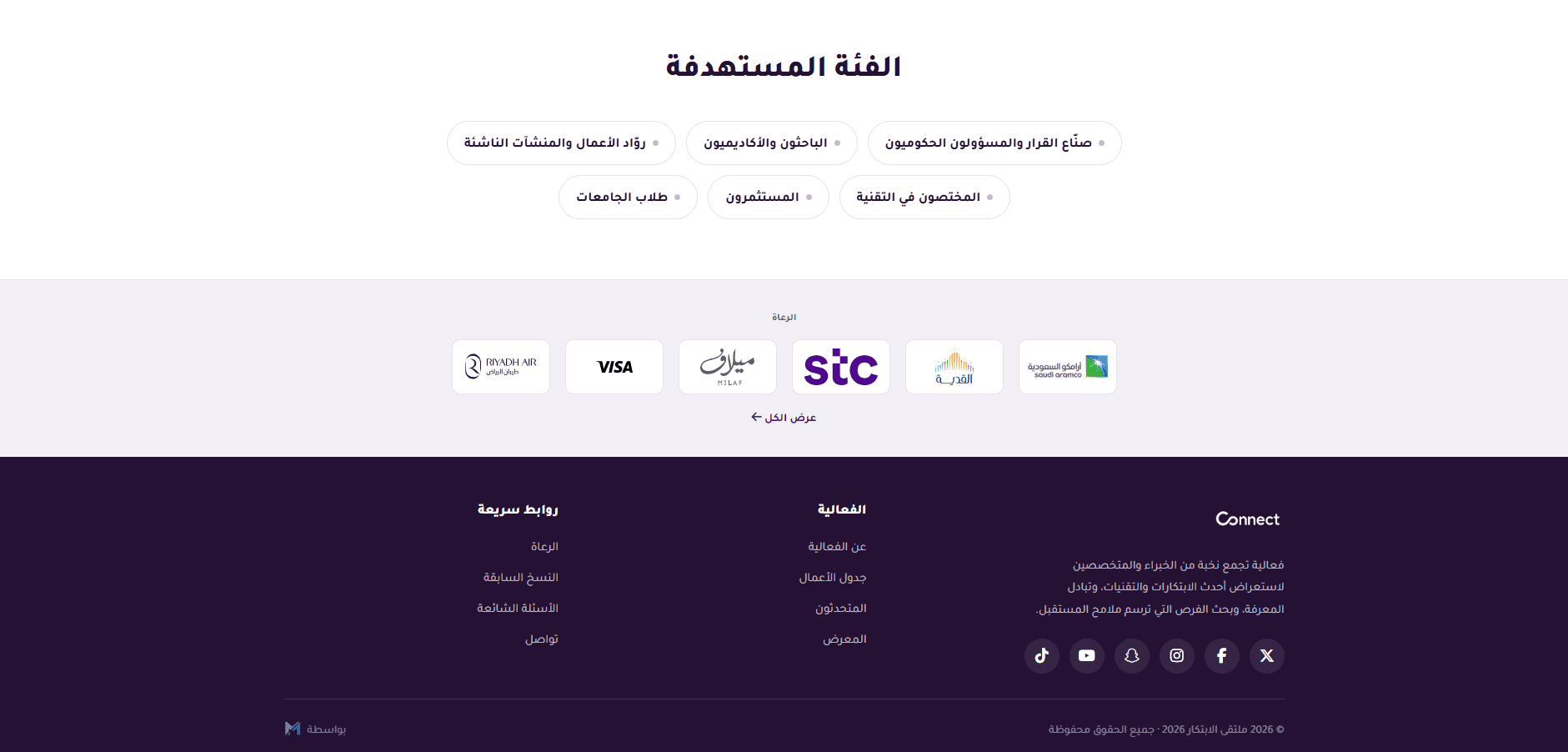
Sponsors want their logos shown properly. Grouping them into tiers lets you control display priority and size.
Registration link
A prominent button on the homepage that sends visitors straight to your registration link.
MAFAZA EVENTA professional website for your next conferenceProgram, speakers, sponsors, and registration — in Arabic and English.Explore the full overview ←One-time payment · No subscription
Content during the event
During the event, attendees need to know which session is next and where, and any schedule change must show immediately. Update speed and team permissions matter here: who publishes, who edits, who reviews. A change log and user permissions reduce mistakes under pressure.
Content after the event
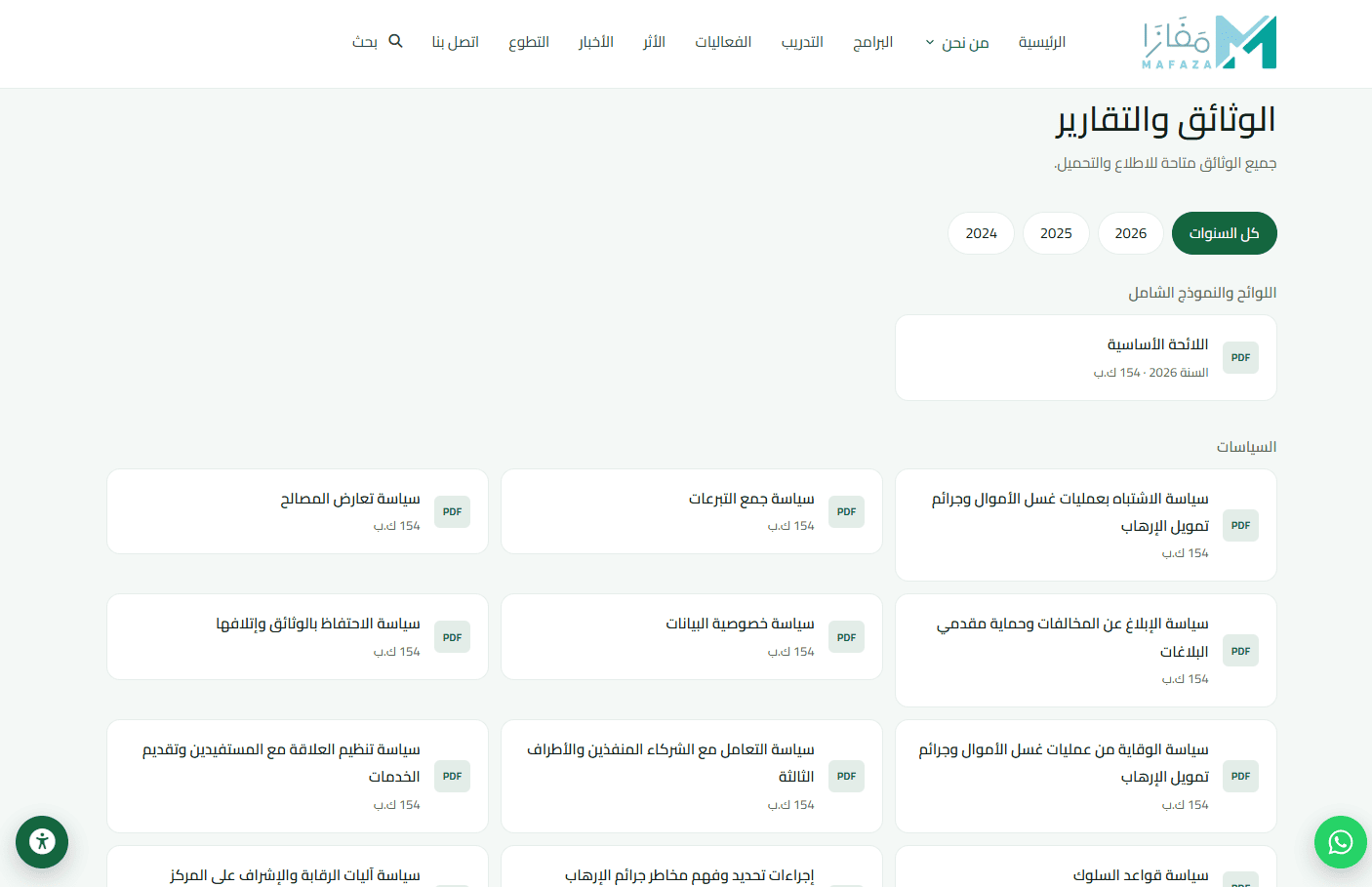
Many organisers neglect this phase, yet it builds the reputation of future editions. Publish photos, materials and media content, and keep each edition in its own archive rather than overwriting or mixing it with the new one. A prospective sponsor can then see your track record clearly.
One panel for all of it
Stitching these sections together from separate tools is tiring. That is why we built Mafaza Events & Conferences: an Arabic control panel to manage event definition, program and speakers, governance, sponsorship, content and media, and past editions, with a bilingual Arabic and English site.
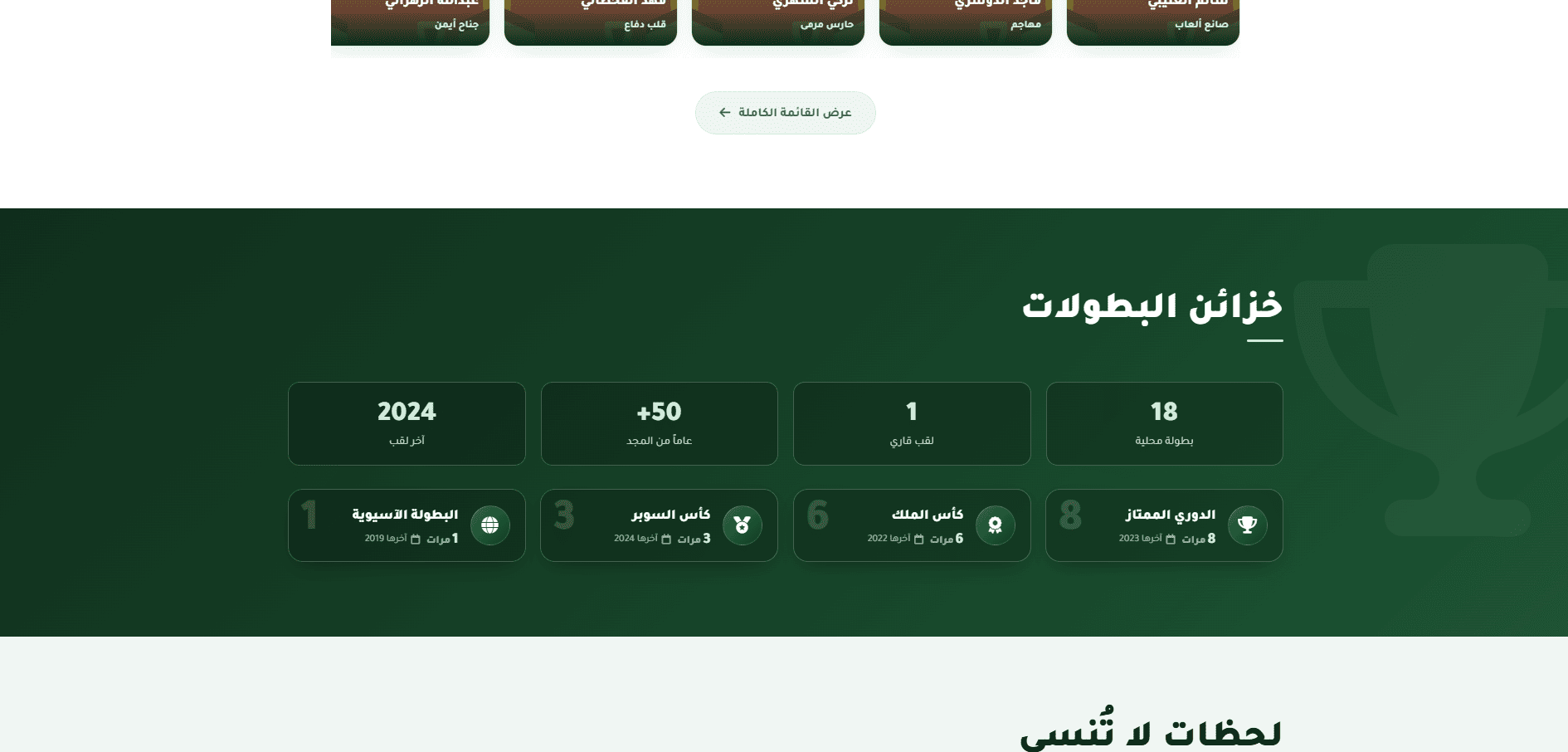
- Reorder or show/hide 13 homepage sections without code.
- Four sponsor tiers with priority and display size.
- Brand colours and three homepage layouts.
- An Arabic admin with publishing control, change log, user permissions, trash recovery, backups, inbox and file manager.
Visibility in search
Your event website should be discoverable whenever someone searches for it, whether on Google or even through ChatGPT.
That is why, at Mafaza Events, we have focused on building a dedicated SEO and AI search optimization system. It includes fast and efficient URL indexing, structured data (Schema Markup) embedded in page code to help AI-powered search engines understand your content, analytics, and full control over indexing settings.
All these features are built into the system as standard, helping your event gain visibility across both traditional search engines and AI-powered search platforms.
What it does not cover
To be transparent: the system is an informational and management website for your event. It does not include ticketing, payments, attendance or check-in, badges, live streaming, hotel booking or a mobile app. Knowing this upfront helps you decide whether it fits.
However, this does not mean integration is not supported. At Mafaza Events, we have considered the needs of event management companies that provide their own registration, ticketing, and crowd management systems. The integration is simple: just provide the registration platform's URL, and it can be seamlessly integrated into Mafaza Events — with no programming or coding required!
Which events it suits
It suits government, scientific, trade-show, business-forum, academic, cultural and nonprofit events.
Conclusion
A successful event website covers all three phases: definition, schedule, speakers, sponsors and registration before the event; fast updates during it; and an archive plus media content afterwards, all managed by your team from one panel.
Want to see it in action? On the Mafaza Events & Conferences page you can view the live demo, read the FAQ, check whether it fits your event, and request a formal quote.
LIVE · Live demoTry MAFAZA EVENT yourself before you decidemafaza.solutions/demo/client-eventsOpen the demo ↗